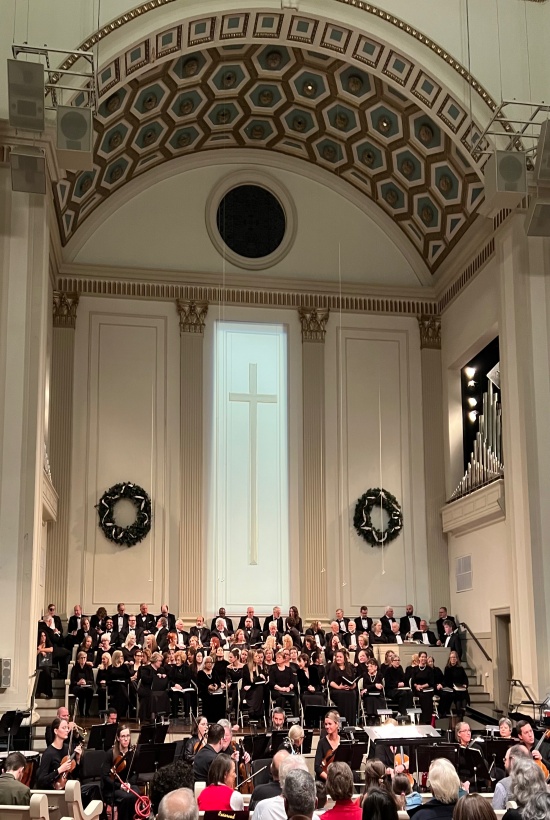
We’ve all seen them: well-dressed women sitting in neat rows of cushioned chairs, listening to a hyper-ventilating speaker walking around, next to, but rarely behind the carefully placed podium on a raised platform. We’ve also heard the stories of these people, generally women: their marriages, children, schedules, and lengthy verbal resumes. If the cost of one of these traveling “evangelists” exceeds the church’s budget, then the audience receives their messages via a DVD of paid for website and watches it all on a flat-screened TV monitor the size of Montana.
 What we know nothing about are the lives, wishes and dreams of the women who are hanging on every word the speaker says. There are untold stories of these people who comprise the audience. What about the thirty-something mom who is gently pushing back a stray lock of hair as it refuses to stay restrained by its colorful hairband? Was she in a hurry as she got ready to attend the conference? Perhaps her rushed hairdo had something to do with the daily juggling act she sustains five days a week as she works outside the home and has three school-age children. How much maneuvering did this woman do to get to the well-publicized seminar sponsored by her church?
Span the audience again. There, in the third row, first seat, is an attractive older woman, sporting a carefully matched suit. What is her story? Is she widowed or happily married? Perhaps she’s recently retired, looking for a changed identity as she navigates a new life, no longer active in the profession she loved. Imagine the stories she could tell, if she had the opportunity.
More than likely, however, is the following scenario. Before the presentation, these women, of all ages and experiences, with their workbooks in hand, already had an earlier session, under the direction of an assigned facilitator when they filed into various classrooms and spent 45 minutes sharing their filled in the blank responses from the previous week. There was precious little time to share their stories.
I include a disclaimer here. There are good bible studies to be presented, read, and applied. However, there is much unused talent in today’s local churches. While there is nothing intrinsically bad about most of the highly publicized bible studies (usually reserved for the ladies), few opportunities exist for local church members and adherents to exercise their faith stories and intellects.
Celebrity Christianity has grown exponentially in recent decades. Our churches have succeeded in reducing intelligent, spiritually hungry, sometimes (not always), ignorant people into passive recipients of the high rollers who, come at quite a monetary cost. What can be done to change the currently shallow, spoon-fed congregants into impassioned believers who study the Word (wait for it), workbook free?
Before I provide an answer, let me share a story.
 I grew up in an evangelical church (bible believing). I recall with both affection and respect, one of the members who did a great deal of teaching for one of the Adult Sunday School classes. Len Bevan had not even completed an 8th grade education as he was an adolescent during the Great Depression, and his family needed the additional income their working, young son could add to the household. So, Daniel worked hard and became an upholsterer and a very talented one at that. At any rate, the young man was a student of the Bible. In fact, he was a prodigious reader, quite the impressive self-taught individual.
Years passed and Bevan’s Bible study paid off. He was asked to teach classes in the church in which he was a member. I was a teenager, at the time, and attended some of his classes. I recall the man’s gaunt stature and impressive bearing. He was incredibly articulate; he came across as a university professor. The point is, the man was simply a member of the church with an innate gift for teaching. He literally exploded with enthusiasm for the book he had grown to love. His reverence for the Lord was infectious and sincere. Those qualities with the knowledge he had acquired on his own, made for vibrant classes that encouraged people to think and to pursue actively, their own study of God’s Word.
I doubt if the same scenario would occur today. Why? We’re too busy importing “stars” to teach classes and seminars. Ironically, we encourage members to get involved yet provide few outlets through which such involvement is possible.
Think of the Master Teacher: Jesus. During his three – year ministry, who did he gather around himself? People from various walks of life: Luke (physician), Peter (fisherman). You get the point. Indeed, throughout the history of humanity:
farmers, fisherman, and scholars were called. The Old and New Testaments are replete with such examples. When I think of Jesus, I often see him telling stories with powerful applications that were intended to be applied into lives that reflected faith.
The sociological term that is sometimes used is praxis (reflective action). How can we apply what we have not been taught? Jesus made disciples in order that they, in turn, make disciples. One disciple who comes to mind is one who was not one of the original Twelve—namely, Paul. As I just pointed out above, Jesus used the scholar, the physician, the laborer, and the fisherman. In Paul, the qualities of scholar and laborer are worth noting.
Originally Saul of Tarsus, persecuted the new believers in Jesus as the highly educated Jew saw them as blasphemers. This fact is one with which just about all Christians are familiar. Keep in mind that Saul (later known as Paul), was a Roman citizen and educated by Gamaliel. This ancient Jewish scholar was a “Pharisee doctor of Jewish Law” (“Gamaliel” Catholic Encyclopedia). This piece of Pauline biography reminds us of the credentials of the first century apostle that would place him alongside a Harvard or Yale graduate today. What is particularly compelling about the life of one of the most brilliant people who ever lived is that he also was a maker of tents, a leatherworker (laborer). Saul, later renamed Paul upon his conversion, worked with Priscilla and Aquila during his mission work in Corinth. The new believer lived with the pair of missionaries there for roughly a year and a half. What these details tell me is that disciples are called to be and to do many things. Paul had a phenomenal mind. His letters comprise a major portion of the New Testament. During his three missionary journeys, the man worked brutally hard: was shipwrecked, left for dead, and spent time in prison. Ultimately, he was executed under the Emperor Nero. Contrast that curriculum vitae with traveling evangelists today!
Obviously, we live in a very different society today and have access to all manner of comforts and resources. I do not mean to cast aspersions on pastors/evangelists and their modes of travel or on some of the creature comforts they enjoy. However, the celebrity culture in which many of these “evangelists” are a part, would benefit by a little scrutiny. The apostle Paul worked with his hands and with his exceptional mind. While I am not certain just what the first century equivalent of a Ritz-Carlton would have been, Paul did not seem to focus on creature comforts. Yet, he was born into privilege and knew and experienced such things. However, the apostle was clearly unimpressed with surface privilege and comfort. Certainly, his letters reflect such awareness.
For the love of money is a root of all kinds of evils. It is through this craving that some have wandered away from the faith and pierced themselves with many pangs. (1 Timothy 6:10, ESV)
This passage has been maligned by many well-meaning people who claim that money is the root of all evil. That, however, is not at all what Paul said. He pointed out that it was the love of money that causes destruction.
In recent years, there have been “evangelists” who have talked more about health and wealth than the Gospel of Christ. An alarmingly shallow system of thought has been the result. This chapter began with a description of the typical women’s bible study with its melodramatic speaker and eager audience of quick-fix seekers. A number of these women are generally not challenged to pursue Scripture deeply—rather, to answer prescribed questions and fill in the blanks, forms that follow predictably each chapter of the how-to workbooks sold.
A few years ago, I worked as Women’s Ministry Director in a large church. It is a church that serves a mixed community of affluent and poor people. The leadership is well meaning and prayerful toward its constituents. Sadly, the women’s ministry program is the underfunded, neglected group fed consistently on DVD-driven bible studies. As I worked to move the capable and kind women away from these to an individual “digging deeper” approach to Scripture, many of the worker bees in the ministry dropped out. Eventually, I had no recourse but to do the same. Let me be clear. Overall, this church was serving the community at large in many capacities throughout the calendar year, not merely during Christmas. The Sunday sermons were delivered with passion and conviction by a preacher clearly under the influence of the Holy Spirit. Nevertheless, Women’s Ministry there continues to flounder. While I believe in the sincerity of these people to provide their women (and the community at large), with solid biblical truth, the tendency to serve up workbooks and fill-in-the-blanks is still very present in this church (and countless others, no doubt). It is part of the diet fed to the women in most congregations today. I ask: Why? Are women less capable than their male counterparts to interact with the Bible and commentaries? Why are they not given the opportunity to express themselves in the same manner as the men? Regardless of some of these churches’ views on the ordination of women to pastoral ministry, all of them should be driving men AND women to the Word. Also, these churches need to be using the gifts congregants bring to these churches. Why is there such an obsession to give the men free reign to discuss and approach Scripture while they insist on giving out juvenile material to the women? We’re not talking about who should be filling the pulpits (that’s another conversation altogether). What we ARE talking about here is using the gifts and talents both men and women in the local churches across the country currently not being used.