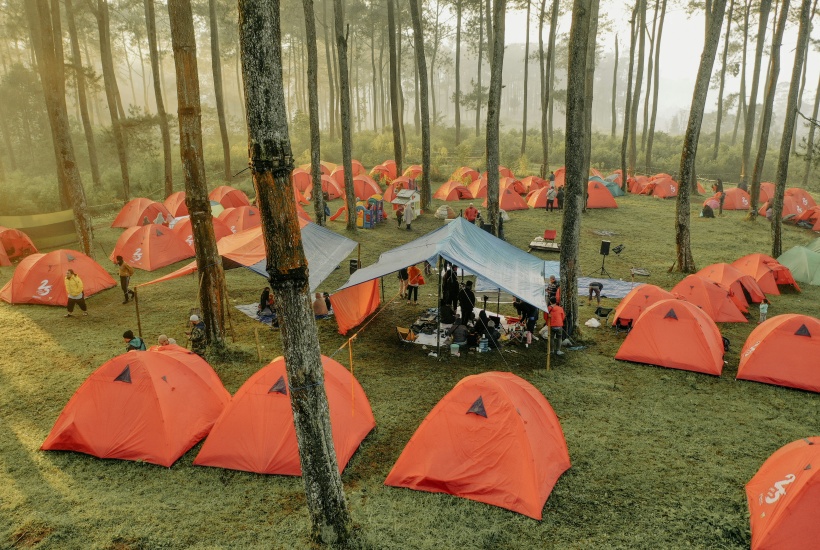
The summer of 1972 came at the end of my unexceptional Junior year in a Christian college in New York. I found myself in Westchester County working as a counselor to developmentally disabled children in Camp Hope.
Camp Hope divided the eight-week summer camp experience into two week increments for each set of campers. The first two weeks, when we counselors were at the peak of our physical and emotional energy, were set aside for the most mentally challenged group of children (followed by successive two-week periods for progressively higher functioning youngsters). The approach made sense; as the summer waned and with it, my energy, the more independent campers clearly required descending levels of care.
I began with a brief description of the academic year I had just completed as an undergraduate. I was an undisciplined student. I cut classes and studied sporadically at best. Nevertheless, I got by. I read a lot (sadly not usually the course required curriculum). Often, I was busy
 holding court with my circle of friends “doing philosophy”. At the end of the spring semester, I was brought up short with Cs and one D.
Shortly after the semester ended, I found myself in a camp filled with children with limited abilities. These little people would never be discussing Kierkegaard or Kant. Most of them were unable to dress themselves. Some, in that first group of severely disabled young people aged 8 to 13, were not toilet trained. In retrospect, my campus rebellion seemed wasteful.
Colleen was one of my young charges during those first two weeks. We counselors had just completed a week or so of orientation. The day had finally arrived. I would be meeting the three children for whom I would be responsible. How would I be able to communicate with them? They were mentally one and two years old in eight to twelve years old bodies. These concerns haunted me during the hours before their arrival.
Early that afternoon, a heavy girl (with her parents in tow), approached me cautiously. One of the camp supervisors accompanied the family. I was thus introduced to Colleen. After a few polite exchanges, I was left alone with the ten – year – old girl, whose beautiful, thick blond hair hung in her face. She was drooling and her head hung heavily to one side. She shuffled slowly to me. I touched the girl gently on her shoulder and led her to the campsite that included several cabins. Later that same day, the rest of the campers arrived, all with slightly varying levels of mental and physical limitations.
I recall vividly, the first time I brushed Colleen’s tangled, thick, blond hair. The ten-year old screamed in fright. I wondered how rare the experience had been for her as she was unaccustomed to it. I put down the brush and tended to another child while I pondered how to solve Colleen’s obvious anxiety about her head being touched. I let it go for a while. Finally, I approached her and began to sing to her. I slowly brushed, section by section, the child’s pretty hair. She quieted down. Before I knew it, two thick braids hung side by side and revealed her face. Within a day or two, Colleen approached me with her hairbrush. I hugged her through my tears.
There were occasional setbacks. I recall one hot, humid night. We were heading back to our cabin with our young charges. I was feverish and filled with body aches. At any rate, upon our arrival to the small cabin, I lead Colleen to the bathroom, set her on the toilet, and slowly removed her clothes. The poor girl had a bad case of diarrhea. The mess had slid down her legs. Meanwhile, the nausea that sight brought on was accompanied by dizziness. Clearly, I was coming down with something. The sweet girl just sat there, covered in feces. Completely unaware. I spoke sharply to her. Then, I looked at her face. She was smiling and trusting. I cried as I washed her.
Obviously, Colleen was an innocent baby who would remain that way for the rest of her life. After I got her cleaned up, in pajamas and in bed, I began to pray. I was woozy at best and went to bed, thankful that I was not the counselor on call that night.
However, the Lord understood my inarticulate, inner groanings of my troubled heart. I fell asleep on immediate contact with my bed.
I share this story because something of significance was displayed through it. On one level, Colleen and I shared moments of trust and communication. From that day on I began to have a relationship with this girl. The fact that she would never outgrow early toddlerhood, was less important than the reality that connection and trust happen, even without verbal expression. However, these insights would prove to be just the beginning, during my increased awareness of how much these kids would end up giving to me.
The first two-week period ended. When Colleen’s parents returned to take their child home, they were stunned by the girl’s neatly braided hair and generally improved appearance. We talked briefly and pleasantly. The small family drove away. We counselors had to prepare quickly for our next group of children who would be arriving in just a few hours.
Our tasks became easier and our communication with our campers became more vibrant as the verbal interactions increased in correspondence with their increased levels of cognitive abilities. Another story comes to mind.
I remember a particularly warm, drowsy afternoon. We headed for the cool and shade of the lush, wooded paths away from the campgrounds and the heat. Our young charges were excited by the prospect of a “hike,” and filed willingly in line. As this group of children surpassed the first set of campers in both physical and mental capacities, the range of activities widened accordingly. The summer was winding down by this time and these exuberant kids would not be with us much longer, so a break from their usual routine was called for.
I began to sing loudly, ‘This old man, he played one. He played knick-knack on my thumb… “. Quickly, the children caught on and followed suit. Within minutes, all the kids, with their respective counselors, joined in. The animated, happy voices echoed in the woods. My eyes filled with tears as the singing continued. I felt like the Pied Piper during that pretty, yet sultry afternoon. The tears came, I think, from an awareness of something profound. I imagined these children one day, in eternity with Jesus, glorified bodies and minds.
The Lord spoke to me that day. For all the various gifts and talents possessed by most people of normal to exceptional intelligence, their entry into glory was not guaranteed. What is the sin that cast out Satan from Heaven? Pride! During the eight weeks of camp, that unfortunate characteristic was not demonstrated by our campers.
Yet, the world sees such people as woefully lacking… and they are, in this life. However, In the life to come that will no longer be true.
These disabled kids were teaching me humility day-by-day. Certainly, our Lord was working through them, even though they had no clue of their positive influence on my heart and mind. I am reminded of these expressed by Paul in Philippians 2:5-11:
Have this mind among yourselves, which is yours In Christ Jesus, who, though he was in the form, of God, did not count equality with God a thing to be grasped, but emptied himself by taking the form of a servant, being born in the likeness of men. And being found in human form, he humbled himself by becoming obedient to the point of death, even death on a cross. Therefore, God has highly exalted him and bestowed on him the name that is above every name, so that at the name of Jesus every knee should bow, in heaven and on earth and under the earth, and every tongue confess that Jesus Christ is Lord, to the Glory of God the Father.
I began this chapter with a true story from my personal past, one that impressed upon me the surprising nature of the life we’ve been given. Upon my arrival at that rustic camp more than 50 years ago, I had no idea what was in store.
My initial feelings of and helplessness, turned into weeks of receiving lesson upon lesson about who I was meant to be as I was taught daily by children who, in the eyes of the world had nothing much to give.
Jesus became a man while he never ceased to be God. He allowed himself to be mocked, misunderstood, and murdered. Through his self-emptying (Greek word, kenosis, Philippians 2: 5-11, as quoted earlier), we come to understand what it means to empty ourselves of the need for status, for example. We come to understand, in our human frailty, the deep joy of true dependence on the One from whom our strength comes.