I am not referring to the 1980 film, Ordinary People with Mary Tyler Moore. That movie was a depiction of an upper middle-class family, led by a prosperous tax-attorney, whose well-groomed house with its ample square footage, in an upscale neighborhood, suggested comfort and predictability. I am going in an entirely different direction.
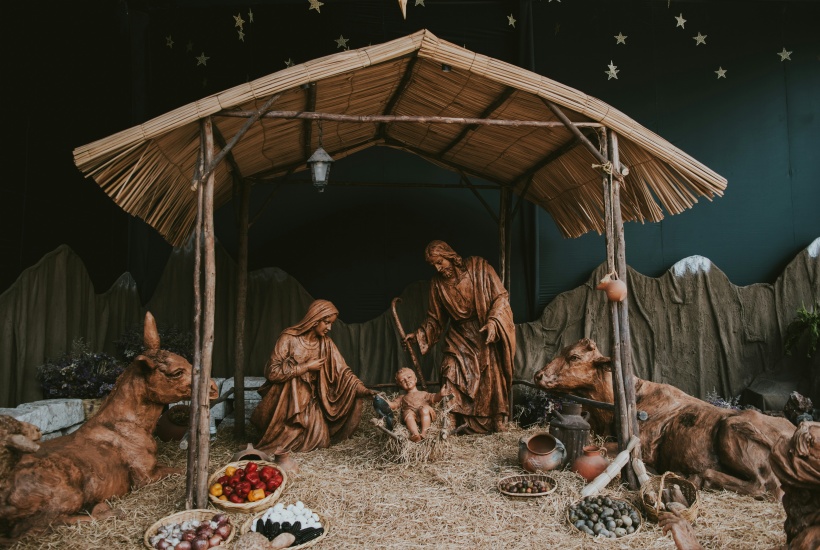
Travel with me back in time two-thousand years ago to the small town of Nazareth in Galilee (now northern Israel). I see a semi-arid desert land with modest clay dwellings. One family stands out: the carpenter Joseph with his young wife Mary. While we know little of Jesus’ childhood, we do know a fair amount about his birth. Throughout the centuries, Luke’s account of Jesus’ entry into human history by the virgin Mary, an adolescent girl, is familiar with many. The point here is the humble nature of the first century Jewish family. Prophets of old wrote of a coming Messiah The devout and pious expected a prince, an infant born of royalty. Contrast the expected image of a palace to a crude, cave-like structure that housed animals with a feeding trough for a manger. Nothing about the Savior’s birth resembled early expectations.
In Isaiah 7:14, the prophet writes: “…the Lord himself will give you a sign. Behold, the virgin shall conceive and bear a son and shall call his name Immanuel”. This major prophet is quoted often for no small reason. Isaiah’s prophecies are given and fulfilled by God. In the quoted verse above, Isaiah speaks of the coming Messiah being born of a virgin. More than seven hundred years later, Jesus is born.
The minor prophet, Micah foretells the coming of Jesus: “But you, O Bethlehem Ephrathah, though you are small among the clans of Judah, yet out of you shall come forth for me one who is to be ruler in Israel, whose goings forth are from of old, from ancient days”. One of the 12 minor prophets of the Bible, Micah (740 B.C. – 670 B.C.), wrote to Jerusalem. This short prophetic work provides us with significant references to the coming of Christ. In the passage above, Micah mentions the city of Bethlehem as the birthplace of a future king, more than 700 years before the historical event.
Both Isaiah and Micah wrote during the 8th century B.C. I refer to them now as their timetable is important. Several hundred years before Christ, these men alerted their people of a coming Messiah. For more than half a millennium, the ancient Israelites were in a state of expectancy. When the Lord did come, many would not accept Jesus as their long-awaited king. The lack of royal pomp proved to be a major stumbling block.
Has human nature changed? I look at our society in which health and wealth translate as status, worthy of preferential treatment, and I wonder how we would have responded to the Christ more than 2,000 years ago. “What good comes out of Nazareth? Many first century people asked. Yet prophecy tells us the King of Kings would come from a humble family in the unimpressive small town of Nazareth.
What mighty words of conviction and purpose! My prayer is that more of us today, would follow these ancient voices.