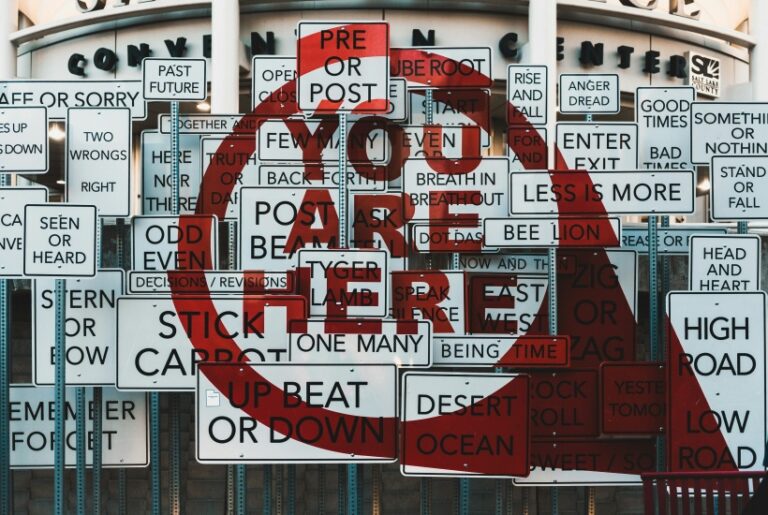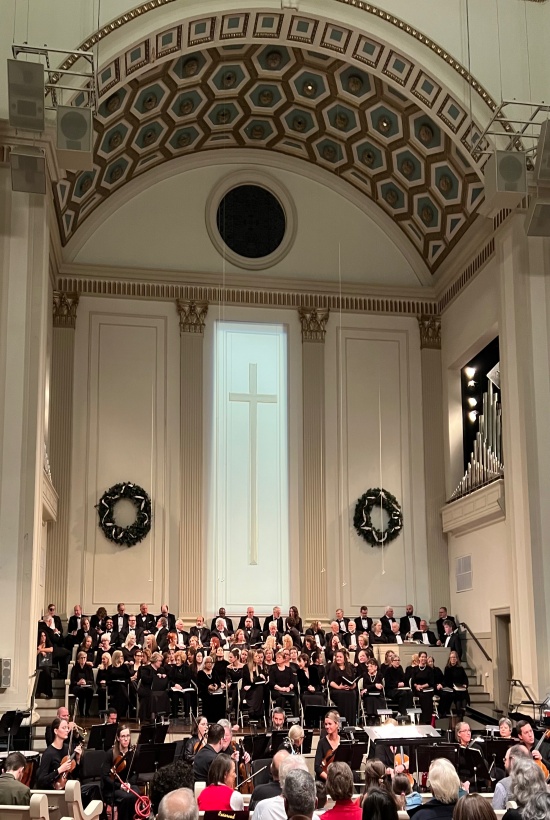
“Thank God It’s Friday” became such a mantra during the 1980s that it spawned a chain of restaurants with that name. I was in seminary at the time. I recall the plaque one of my professors had hung on a wall in his office: Thank God it’s Monday. Clearly this was a statement that refuted the sentiment that thanked God for only two days out of the seven-day week.
What accounted for the reversed perspective on life? How many people continue to thank God it’s Friday, as they apparently curse the Lord for the rest of the week? I remember my dislike of the acronym TGIF on two levels: 1. It trivialized the Godhead to a slogan. 2. It implied people were miserable most of the time. Work out the math. What an indictment on the value of life! I am reminded of one of the key figures of the American Renaissance, Henry David Thoreau, and of his dictum that concluded many people were in permanent states of “quiet desperation”.
The Light of the world entered human history more than 2,000 years ago and promised a life of purpose and meaning. Granted, the Lord never promised a life free of heartache and difficulty, but one certainly worth living; one that He promised to bring us through, no matter the circumstances. Recently, I came across an article about mega churches (The False Prosperity Gospel Popular in Megachurches by LLana Quinn), and their teaching of prosperity gospel. It occurred to me that they were, implying that prosperity gospel promotes materialism, along with a kind-of-party mentality toward life generally. Jesus’ teachings bear no resemblance to this. Matthew 5-7 (Sermon on the Mount), makes that abundantly clear. The Rabbi was born into a poor carpenter’s family of hardworking people of faith and diligence. Nowhere in Scripture do we encounter the Master Teacher promoting excess and/or “conspicuous consumption” (phrase coined by American economist/sociologist, Thorstein Veblen in his 1889 book, The Theory of the Leisure Class). Clearly, Veblen was ahead of his time. An alarming number of churches openly promote such thought. “We’re meant to be healthy and wealthy,” they boast. Explain that statement to the millions of Godly people who are poor and suffering! The best response is taken from Jesus’ introduction to His Sermon on the Mount: In Matthew 5:4-5 we read, “Blessed are those who mourn, for they will be comforted. Blessed are the meek for they will inherit the earth.” One definition of the term meek or meekness, according to one writer is well-stated here. “Meekness” is a humble attitude that expresses itself in the patient endurance of offenses. “Gentleness” is a practical synonym. It implies mercy and self-restraint. Meekness is not weakness. (Taken from “Meekness not Weakness” by Harvest Ministries.)
We see, then, the sharp contrast between the teachings of Jesus, and those espoused in society. Yet, as pointed out above, many of our churches appear to have a serious case of amnesia when it comes to solid biblical instruction. We are to bear witness of our faith in word and deed. Such flagrant dismissal of basic bible doctrine is serious.
Roughly four decades ago, I received the news that a teenager from my childhood church was dying of cancer. He was the son of a family I had known years before. The boy was a committed Christian with levels of faith and wisdom few adults possess. I would go so far as to say that he exhibited true meekness. He did not complain about his condition. It would not have been difficult to understand outbursts of “why me?”. Rather, the teenager talked about his Savior, during his final weeks, perhaps months, when he was still well enough to go to school. While he surely had to have had his moments, he shared his faith with confidence. There was a light in his soul. Clearly, the young man knew to whom he belonged.
I have no idea what the belief system is of the man who wrote the words I quoted in the Preface, but I would like to quote them again with additional commentary. We are often tired, not because we do too much, but because we do too little of what sparks a light in us. Regardless of the beliefs of the writer of these words, intentionally or not, the man was on to something. So often, we spend our days wastefully. I know I have and do. It takes a lot to live with purpose and intentionality. Many non-Christians live more purposefully than do Christians. We are to ignite that spark. One might wonder just what that spark is. I suggest that it is the fire within us; add the light of the Holy Spirit into the Christian and consider the impact such people so infused could do to change the world! Sadly, it is often the Christian who is complacent and in a state of ennui.
The death of the teenager I just described, still serves as a powerful witness to me today, as I write these words. Do I possess the spark to ignite that light regularly, that its glow might have a positive impact on those I meet day-by-day?
Another illustration comes to mind. A few years ago, I was teaching a course on apologetics. In it, I addressed people from the apostle Paul to Dietrich Bonhoeffer to those apologists still alive. The class was engaged because I was raising issues to which we could all relate. It all came down to, what do I believe, and why do I believe it? At any rate, I recall one particular day when the group expressed their enthusiasm toward the course at the end of the session. I left feeling alive, feeling good. As I drove away from the church, I felt thanksgiving in my heart for what I believed the Lord was doing through me. Meanwhile, I had to stop at the local grocery store. I was unable to find what I was looking for. One of the managers had confirmed that the store had run out of the item. I was annoyed and expressed my irritation with a sarcastic remark. As I turned to walk away, I saw that one of the other employees who stood nearby and had witnessed my anger, was in the class that I had been teaching a mere hour before. What were her thoughts as she observed such a contrast in my behavior from what she had seen earlier in a church setting? What did those opposite attitudes say to her? Is it likely that my witness was shattered? That may or may not have been the case, but clearly my short fuse might well have confused her. The “light” that I had described so glibly and confidently was most definitely absent. Apparently, my light was as low as a flickering candle about to go out.
Consistency is difficult. We seek to be sincere, even diligent in our respective walks with Jesus. He is the Light of the World; at best, we are his pale reflections. God has instilled in us, not only the breath of life, but specific gifts, propensities. Sometimes it takes years for these to surface. As Christians, we should be imbued with the light that only the Lord can give. It is a light that becomes evident through the various gifts with which all of us have been endowed. When we become out of touch with the very things that bring us joy in the first place, we are distracted, even altered. In the example I shared above, I allowed my joy to be set aside in the wake of a momentary irritation. How little it takes to permit darkness to dim the light!
What about the spark that ignites the light in the first place? I think the Holy Spirit sparks the light in us. He provides us with the motivation to share our reason for meaning and purpose in our daily lives. The way we experience meaning and purpose varies in accordance with the gifts our Lord has distributed to us so liberally. That topic alone could occupy the pages of another book.
I am reminded of a true story that predates all of us by more than 2000 years: The Last Supper as recorded in John’s Gospel. Jesus has explained to the remaining eleven disciples (Judas was about to betray the Lord and had left, recorded in the previous chapter), that He had to depart. The Rabbi knew what lay before him on this sober night before He would be crucified. There is much the very human disciples did not comprehend that evening. Their flawed humanity prevented that level of understanding. Nevertheless, their Master Teacher was telling them something profound; that much, I suspect, they did understand. The content was over their heads, but the fact that a serious subject was being broached, probably did not escape them. “If you love me, keep my commands. And I will ask the Father, and He will give you another advocate to help you and be with you forever—the Spirit of truth. The world cannot accept him, because it neither sees him nor knows him. But you know him, for he lives in you. I will not leave you as orphans. I will come to you” (John 14: 15-18).
What an experience that had to have been for this group of men from so many different backgrounds (fisherman to tax collector)! For three years these men had traveled with Jesus; had shared meals, miracles, and messages. All of that was about to change. The real-in-the-flesh-messiah would soon be gone. On that night, however, Jesus was introducing them to the reality of the Holy Spirit/Paraclete, who would indwell them for the rest of their lives. The role of the third person of the Holy Trinity was about to be inaugurated. While in seminary, we often discussed the Trinity in terms of its form/essence and function/activity. Keep in mind, that Jesus’ entry into human history, inaugurated his role. As the Master Teacher was preparing to return to His glorified place at God’s right hand, the Holy Spirit was preparing to enter the hearts of all who believed. In other words, God himself would take permanent residence into their lives. Before, the disciples had Jesus, who had never ceased to be God, even though he was also human. Soon, the Lord’s presence would still be with them but not in the same way. What questions the disciples must have had during that incredible meal with their Master.
Earlier in this chapter, I shared a story about a teenager who suffered from bone cancer until he died when he was 16 or 17 years old. His circumstances reminded me that people who have the Light of the world react vastly different from those who don’t. While I have observed many non-believers who, frankly, appear to have a certain spark in their lives, usually their “spark” has more to do with the outward: lovely homes, successful careers, et al. Were their lifestyles to crumble due to situations beyond their control, the sparks would also fall into oblivion as the sources were of this world. The kind of light Jesus spoke of to his disciples was one of an eternal nature. The young, high school student alluded to above was clearly sparked, if you will, by a permanent light, one that only the Savior of the world provides.
Jesus spoke often of discipleship. If the concept was unimportant, clearly scripture would not be replete with calls to us all to follow the Master and to share with the respective “worlds” in which we all live. In short, we are called to disciple one another.
During the past two years the entire globe has been encouraged to withdraw from each other (in many cases, this dictate includes family members), due a global pandemic. As serious as pandemics are (several people have brought up the “Spanish” flu that gripped the planet more than one hundred years ago)This is not a sentence; complete your thought here. For months at a time, churches were closed (liquor stores, on the other hand, were not), concerts were cancelled, as were holiday celebrations. In short, life itself was put on hold in order to avoid an illness that, tragically took many lives. Another sad feature of the past several months, close to two years now, is that while many people halted their lives in fear of death, they, in effect, stopped living, another kind of death. The increase in suicides bears this out. Why do I bring up a topic that carries with it such controversy that people have difficulty maintaining civility when they dare to bring up their often-conflicting points of view on the subject? I bring it up because Jesus called us to be disciples and to make disciples, which sometimes includes difficult, potentially conflicting points of view. People were not created to be silent, inert, and separated from one another. Yet, they remain so often to the extent of broken families, due to the conflicting views of individuals within the family systems themselves.
As I continue today, several weeks after the above, the United States, indeed, the world, is approaching the two-year mark of the isolation to which I alluded. Where are the evangelical voices about the isolation that has broken families, churches, and schools? Few people are standing up to the Draconian measures that have silenced the medical community at large. Certainly, our churches/pastors are threatened by the possibility of instinction if they dare to express the issues that have gripped such groups into fearful silence.
The Master Teacher did not avoid difficult subjects; in fact, He brought them up and ultimately was crucified. Believers throughout the globe have been persecuted for centuries and continue to be. Meanwhile, we sit in our comfortable pews, return to our comfortable homes, and discuss, in frightened tones, the horror of the violence and threatened measures of more governmental control while we do nothing to act as change agents!
I am reminded of the 20th century dynamo, Dietrich Bonhoeffer. He was a scholar, pastor, writer, and ultimately a prisoner of the Third Reich. He was hung for his beliefs. The man was 39 years old. Let’s mull that over for a while.
Do I need to elaborate on the above paragraph?